
Smart Locks for Front Doors: Why the Most Important Door Deserves More Than a Deadbolt
A front door lock needs more than a motor bolted to a builder-grade deadbolt, because it is the most used entry in the home. BTRtec fits premium keyless entry door locks with fingerprint, vein, or face recognition directly into the door edge, matched to your household and installed as part of the $600 to $1,150 plus CAD purchase price.
Your front door is the most used, the most seen, and the most tested door in your house, and it is the one most people put the cheapest smart lock on. Search for the best smart lock for a front door and every list hands you the same answer: a battery-powered deadbolt from one of three big brands, wrapped around the same builder-grade bolt that came with the house. It is convenient, and for a side door or a rental it is fine. For the front door of a home you own, it is the wrong place to save money, and this article explains why, and what to look at instead.
The front-door mistake almost everyone makes
The mistake is treating the front door like any other door. It is not. It takes more daily use than any door in the house, it is the one an intruder actually approaches, and it is the first thing a guest sees. Yet the standard smart lock upgrade changes none of that. It wraps a motor and a keypad around your existing bored cylindrical deadbolt, so you get an app and a code on top of the exact same bolt you already had. The convenience is real. The build quality and the mechanism underneath are unchanged.
That is why the big-brand "best of" lists all look the same. They compare readers, keypads, and apps across a row of near-identical deadbolts, because on those locks the part that actually works the door is the same builder-grade bolt. On the one door where the hardware matters most, the reader is not the thing to shop for. The lock is.

Why a front door specifically deserves a mortise lock
A mortise lock is fitted into the edge of the door as a single, heavier mechanism, rather than a bolt dropped into a hole bored through the face. That is a different class of hardware, and the difference does the most good exactly where a front door needs it. For the underlying explanation of the format, see our guide to what a smart mortise lock is; here is why it matters specifically for a front entrance.
Be clear about what the mortise body does and does not do. What it does: it puts a more robust, better-engineered mechanism into the door, one built to survive the heaviest daily use in the house and to resist the wear and the manipulation that eventually loosen a cheap lock. It integrates the latch, the deadbolt, and the smart hardware into one unit rather than a motor clipped to an old bolt. What it does not do on its own is make a door impossible to force. Overall security is a system: a lock in a solid, properly reinforced door, in a sound frame, with a strike plate held by three-inch screws into the framing, is what actually resists a kick, and a mortise lock earns its place inside that system rather than replacing it. We are telling you this plainly because the brands selling you a reader will not.
Then there is the household and the street. A front door serves everyone, so the right lock lets each person in on the method that suits them: fingerprint or face for the adults, a code or a card for a child or a visiting parent, and a mechanical key kept as the backstop. And a front door is seen. Design is a legitimate part of the decision on the one door that faces the street, which is why the flagship V5 Vision was shaped by the industrial designer Hartmut Esslinger, runs a slim sixteen-millimetre profile, and comes in more than one finish. On a premium lock, those layered methods and that design sit on a body worth protecting, not on a bolt that is not.
What most homeowners get wrong
The first mistake is shopping the reader and ignoring the lock, because the reader is the part the marketing shows you. On a front door, the body is the part that lasts or fails, and it is the part the budget locks skimp on.
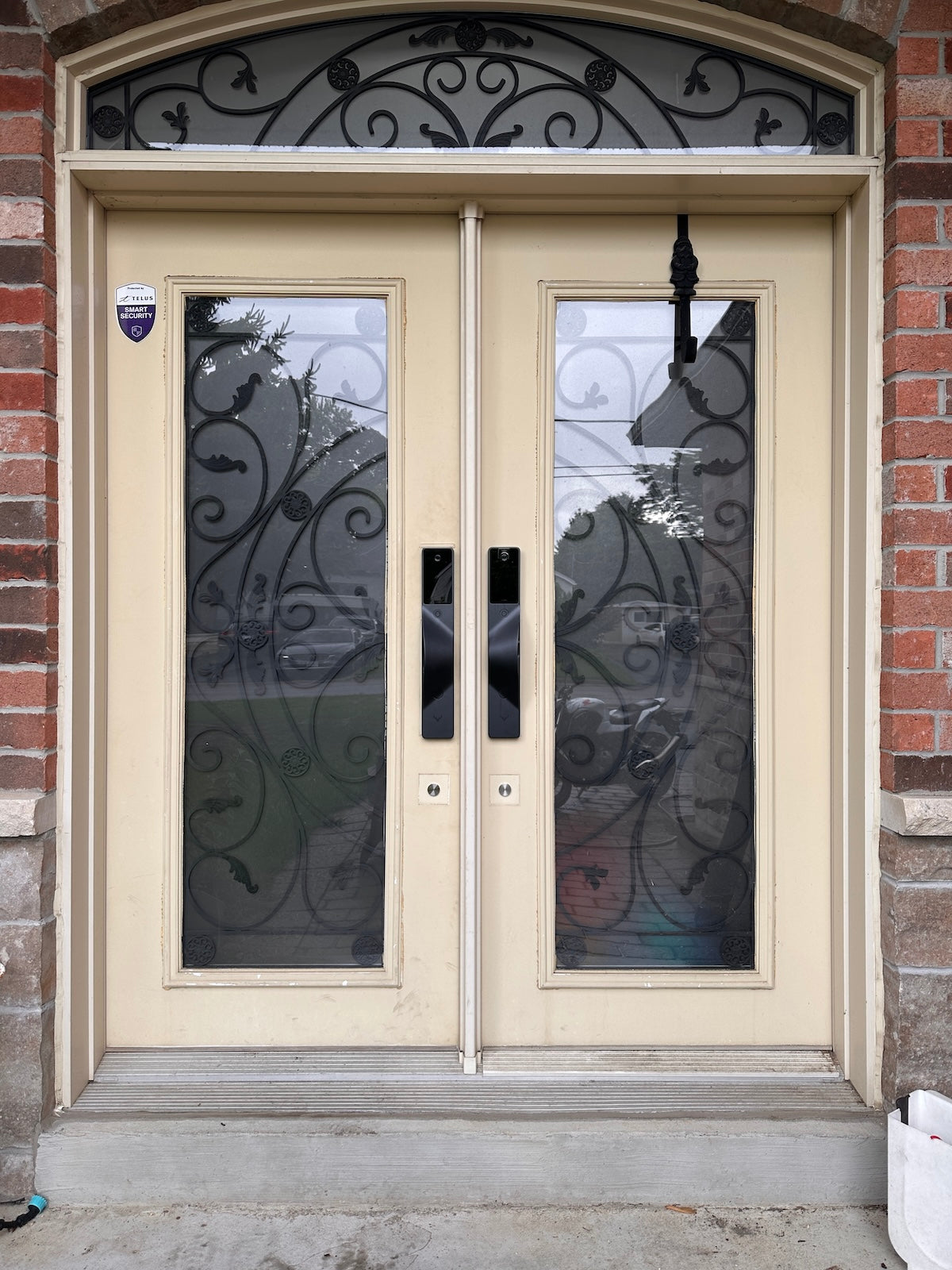
The second is assuming every smart lock is a fifteen-minute, do-it-yourself job. A bolt-on deadbolt is. A mortise lock is cut into the door and wired through it, which is skilled work, and on the door that protects the house it is work worth doing right. Be aware of what the switch involves: if your front door currently has a standard bored deadbolt, moving to a mortise lock means a professional cuts a new pocket and handles the old holes cleanly, so not every door is a drop-in, and some are a better fit than others. That is exactly what the compatibility check confirms before you buy, and we cover the mechanics in our guides on whether a smart mortise lock will fit your door and mortise lock installation.
The third is forgetting the front door faces the weather. It is the door most exposed to a Canadian winter, so a cold, wet, or gloved hand at the reader is a real, recurring problem. The answer is a lock with layered access, so a frozen finger is never your only way in: you tap a card, punch a code, use your phone, or use face recognition.
What to look for in a front-door smart lock
Start with the body, not the biometrics. Confirm the lock is a genuine mortise body built into the door, not a motor wrapped around your old deadbolt. Then look at how everyone in the house will actually get in, day to day and in January, which means more than one reliable method rather than a single sensor.
Be precise about where your data lives, because it is not all one answer. Your biometric templates should be encrypted and stored on the lock itself, not uploaded to a cloud account, and the core unlocking, biometrics and codes, should keep working with the internet down. The connected extras are different: a video doorbell, remote notifications, or a smart-home integration like Apple HomeKit do use your wifi, because streaming video and controlling the lock from away require a network. A good lock keeps the two separate, so your face never leaves the door even though your doorbell clip reaches your phone. Finally, confirm the lock keeps a mechanical key as a fail-safe, and treat professional installation as part of the product on this door, because a front-door lock fitted badly is worse than a cheap one fitted well.

Which BTRtec lock suits a front door
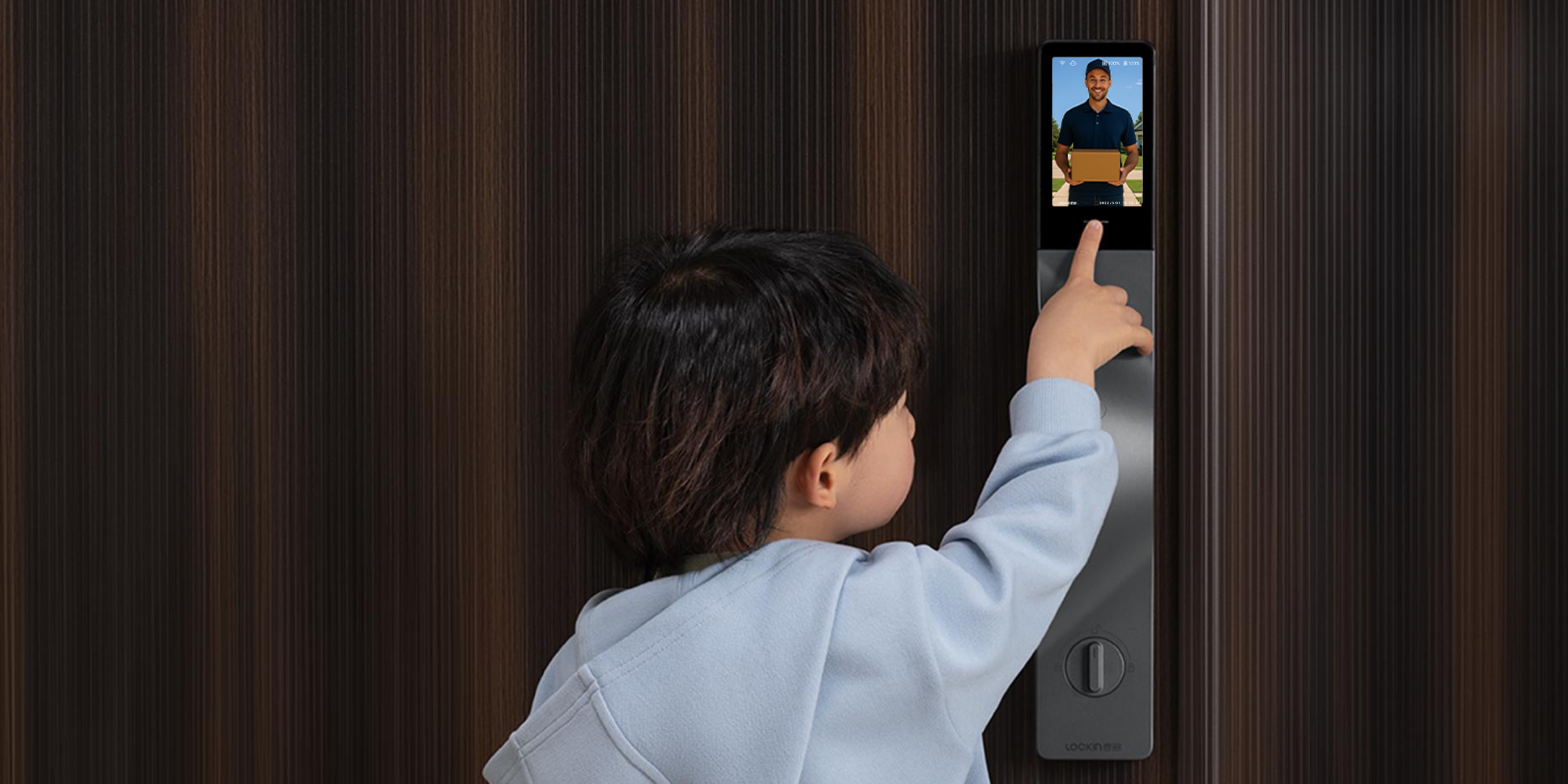
For a front door, the choice comes down to how your household wants to get in. If you want clean, fast, everyday fingerprint access without a camera, the X9 is the straightforward way in. If your household includes worn fingers, older hands, or small children, the S5 uses finger-vein recognition, which reads the vein pattern beneath the skin and works when a fingerprint will not, making it the most inclusive option for a busy family entrance. If you want to watch the step and the package on the ground, the S6 Max adds a dual-camera video doorbell to vein and face recognition. And if you want the flagship, hands-free three-dimensional face recognition, a 2K video doorbell, and Apple HomeKit, the V5 Vision is the one to look at. Match any of them to your door from the range of premium smart mortise locks, and for a full comparison of the biometric methods, see our guide to fingerprint, face, and vein recognition.
How BTRtec handles this
BTRtec sells premium smart mortise locks for front doors and installs them, which is the part the mass-market brands leave to you. Over more than six years we have installed over 10,000 locks across North America, and every order starts by confirming your front door can take the lock rather than ending with a box on your porch. Our technicians are certified, installation is included rather than billed as an extra, and if your door is not a fit, we tell you before you spend anything. The honest first step is not the checkout button; it is uploading a couple of photos to the compatibility check so you know your door can carry the lock.

FAQ
What is the best smart lock for a front door?
For a front door you own, the best choice is a premium smart mortise lock, because the front door is the one that most needs a robust lock body rather than a motor wrapped around a builder-grade deadbolt. The right model depends on how your household wants to unlock, from fingerprint to face to finger-vein.
Is a smart lock safe for a front door?
On premium hardware, yes, provided you look past the reader. Choose a genuine mortise lock body rather than a bolt-on deadbolt, biometric data stored encrypted on the lock rather than in the cloud, a mechanical key as a fail-safe, and offline unlocking so a dropped internet connection does not lock you out. Remember that overall security also depends on a solid door, a sound frame, and a strike fixed with long screws.
Should I put a smart deadbolt or a mortise lock on my front door?
A smart deadbolt adds convenience to the bolt you already have. A smart mortise lock replaces it with a stronger, longer-lasting mechanism built into the door. For the front door of a home you own, the mortise lock is the upgrade that actually changes the build quality and the feel, which is why it is worth the difference there.
Do smart front door locks work in winter?
A good one does, because it does not rely on a single method. A fingerprint reader can struggle with a cold or gloved hand, so a premium front-door lock offers layered access, a code, a card, your phone, or face recognition, so you are never depending on one sensor in January.
Do I need a professional to install a front-door smart lock?
For a mortise lock, yes, because it is cut into the door and wired through it rather than dropped into existing holes, and the front door is not the one to experiment on. With BTRtec, professional installation is included, and every job starts by confirming your door is a fit.
What is the best fingerprint door lock for a front door?
For fast, everyday access without a camera, a handle-integrated fingerprint reader is the simplest front-door option. The BTRtec X9 pairs this with a five-point locking system built into the door edge rather than a bolt-on motor, starting at $600 CAD with installation included.
Can I get a front door lock with a camera and video doorbell?
Yes. The BTRtec S6 Max and V5 Vision both combine biometric unlocking with a built-in video doorbell, so you can see visitors and packages from an indoor display or your phone. Video models include 3 days of free rolling cloud storage for recorded clips.
Does a front door smart lock work with Apple HomeKey?
On the BTRtec V5 Vision, yes. It supports Apple Home Key for tap-to-unlock with an iPhone or Apple Watch, alongside three-dimensional face recognition, a 2K video doorbell, and Apple HomeKit control, all on a lock fitted into the door edge rather than bolted onto it.
See the front-door range
Your front door deserves better than the lock your builder bolted on. See the range of premium smart mortise locks, then check if your door is compatible by uploading a couple of photos. There is no pressure to buy, and if your front door cannot take the lock, you will know before you spend anything.
There is no pressure to buy. The first step is simply finding out what your door can take.
Check if your door fits