

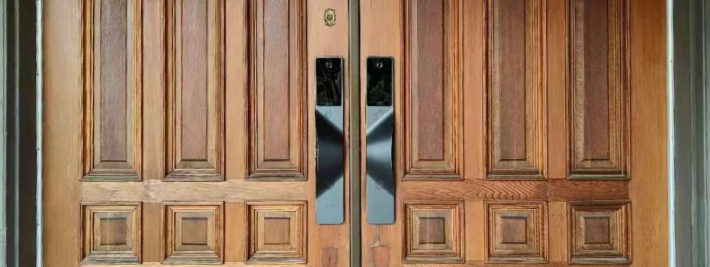
A mortise lock is not a bolt-on gadget screwed to the surface of a solid wood door. It is cut into it. That is the part most product pages leave out, and it is the reason a homeowner with an expensive custom door is right to ask questions before anyone picks up a tool. This guide explains what actually happens to a door during installation, how solid timber, engineered timber, fibreglass, and steel-clad doors each behave differently, and what to ask any installer before they touch a door worth protecting.

What Actually Happens to a Door During Mortise Installation
Fitting a smart mortise lock means cutting a rectangular pocket into the edge of the door, deep enough to hold the full lock body, and mortising the faceplate so it sits flush with the door edge. The escutcheons, the trim plates the handle and reader sit on, mount on the face of the door rather than being recessed into it. Fitting also means boring clean, perpendicular holes through the face of the door for the spindle and thumb-turn. None of that is reversible in the way a bolt-on gadget is reversible. Once the pocket is cut, the door has a pocket, whether the lock stays in it for one year or twenty.
This is why the standard for this kind of work differs from the standard for hanging a picture. A pocket cut a fraction off centre, a cross-bore drilled at a slight angle, or a faceplate routed unevenly does not fail quietly. It shows, permanently, on a door that was expensive precisely because of how it looks and feels.
How Each Door Material Changes the Method
Solid timber. A solid wood door holds a mortise pocket cleanly and has done so in high-end residential settings for generations, which is why the format exists in the first place. The trade-off is that timber shows every mistake. An imprecise cut can leave the lock body sitting loosely in the pocket, or split the stile along the grain if forced too tight. No filler hides either outcome on a door with real wood grain, so the standard for a first-time-right cut is higher here than on almost any other material.
Engineered timber. An engineered door has a different internal structure than a solid slab, typically a core with a timber veneer or composite layer rather than timber all the way through. That structure changes how the pocket is routed and where the stile can safely be cut into, because the internal core does not always behave like solid wood when material is removed.
Fibreglass. A fibreglass door is a skin over a core, and that core decides whether a mortise lock can go in at all. Entry-level fibreglass doors are typically built with a lock block, a section of solid material inside the door specifically there to take the hardware. High-end fibreglass doors more often use a full-length composite or engineered stile, serving the same purpose across the whole edge. Either way, solid material has to sit behind the fibreglass skin, confirmed as part of assessing the door, not assumed on-site.
Steel-clad. A steel-clad door behaves similarly to fibreglass, needing a proper lock block behind the steel skin. Steel adds one more factor: the cross-bores for the spindle and thumb-turn have to be drilled cleanly through metal without distorting the face, a different skill from boring through timber.
What Happens to the Old Lock Holes
When a door is converted from standard bored hardware to a smart mortise lock, it already has one or more round holes in its face, a single hole for a standalone deadbolt, or two for a separate handle set, and a standard bored hole is often wider than a sleek mortise escutcheon. Those old holes do not disappear when the pocket is cut, and this is where a rushed job shows fastest. The right approach uses an escutcheon sized to cover the existing holes cleanly, confirmed against the actual hole size before the new hardware is chosen. The wrong approach is patching the holes separately with filler and hoping the repair blends in, which rarely does on a door with visible grain or finish. Covered by hardware sized correctly, the door looks finished. Patched as an afterthought, it looks like what it is.

Why the Stile Width Sets a Real Limit on Some Doors
The stile is the vertical section of timber running down the edge of the door, and it is what actually holds the lock. A wide stile gives the lock body and pocket room to sit properly, with enough surrounding material to stay structurally sound. A narrow stile, common on glass-heavy or slimline custom doors, may not have enough width to take a full mortise body without compromising the door's structure. A door with insufficient stile width is one of the genuine cases where a mortise lock is not the right hardware, and the honest answer is to say so before cutting anything, not to force a fit that will not hold.
What to Ask Any Installer Before They Touch an Expensive Door
Ask whether they have confirmed your door has a lock block, if it is fibreglass or steel-clad, before scheduling the work. Ask how the old bored holes will be covered, and ask to see how the hardware does it, rather than accepting a verbal assurance. Ask whether stile width is assessed before or after the first cut. A door worth protecting deserves answers to all three before any tool comes out.
Questions About Smart Locks and Solid Doors
Will installing a smart lock damage my door?Not if it is fitted correctly. A mortise lock permanently changes the door in that a pocket is cut into it, the same as any mortise hardware has for generations, but a properly measured installation leaves a clean, finished result rather than damage. The risk is not the lock format, it is a rushed or poorly measured cut.
Can you put a smart lock on a solid wood door?Yes. Solid timber is the classic material for a mortise lock and holds the pocket well, provided the cut is precise, because timber shows mistakes permanently rather than hiding them.
Can you install a smart lock on a fibreglass door?Only if there is solid material behind the fibreglass skin at the edge, either a factory lock block or a full-length composite stile on higher-end doors. If that solid backing exists, the fit is clean. If the door edge is genuinely hollow with no reinforcement, a mortise lock should not be forced into it.
What happens to the old lock holes?An escutcheon sized to cover the existing bored holes, whether a door had one hole for a standalone deadbolt or two for a full handle set, is fitted as part of the new installation, rather than patching the holes separately and hoping the repair blends in. A standard bored hole can be wider than the slimmest mortise escutcheon available, so the plate size is matched to the actual hole, not assumed.
BTRtec is the official North American distributor of Lockin smart mortise locks and installs every one it sells on houses in twelve cities across Canada and the United States, on solid timber, engineered timber, fibreglass, and steel-clad doors, with the fit confirmed before any cut is made. If you are unsure whether your door is a candidate, our guide on whether a smart mortise lock will fit your door covers the measurements that matter.
See the range of premium smart mortise locks, then check whether your specific door qualifies for installation included in the price. There is no pressure to buy, and if your door needs a closer look first, you will know before anything is scheduled.
CHECK IF YOUR DOOR QUALIFIES